The MES System for Production Control

The manufacturing process is often a black hole of knowledge — it all lives in the heads of your operators.
Gain real-time visibility into what's happening on your shop floor!

Process

Total Flexibility

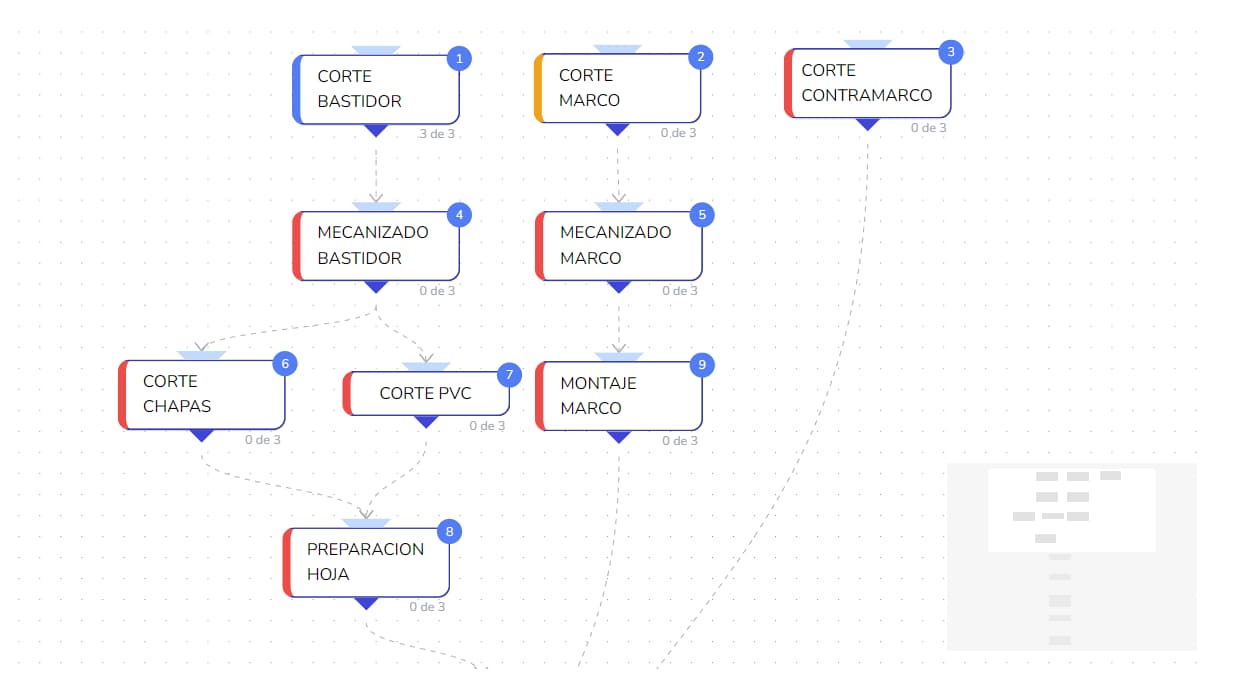
No matter how complex your manufacturing process is, Bold lets you configure everything in a straightforward way.

We use a powerful recipe manager that combines processes with materials (BOM), using conditions to handle all the variations your products may have.
Simplified mode for your operators

Easy for Your Operators

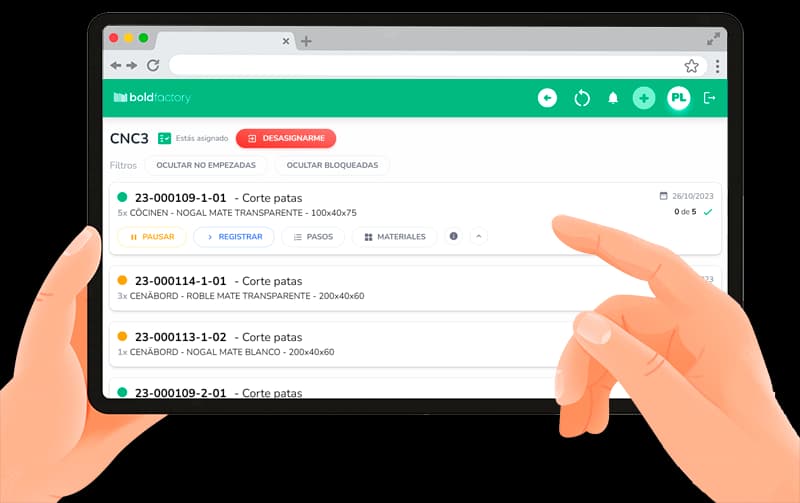
The app includes a dedicated execution mode optimized for tablets, with a user experience designed for people who aren't comfortable with digital tools.

Eliminate resistance to change by giving them a simple tool that guides them and alerts them whenever something is out of the ordinary.
Automatic sequencing

Automatic Sequencing

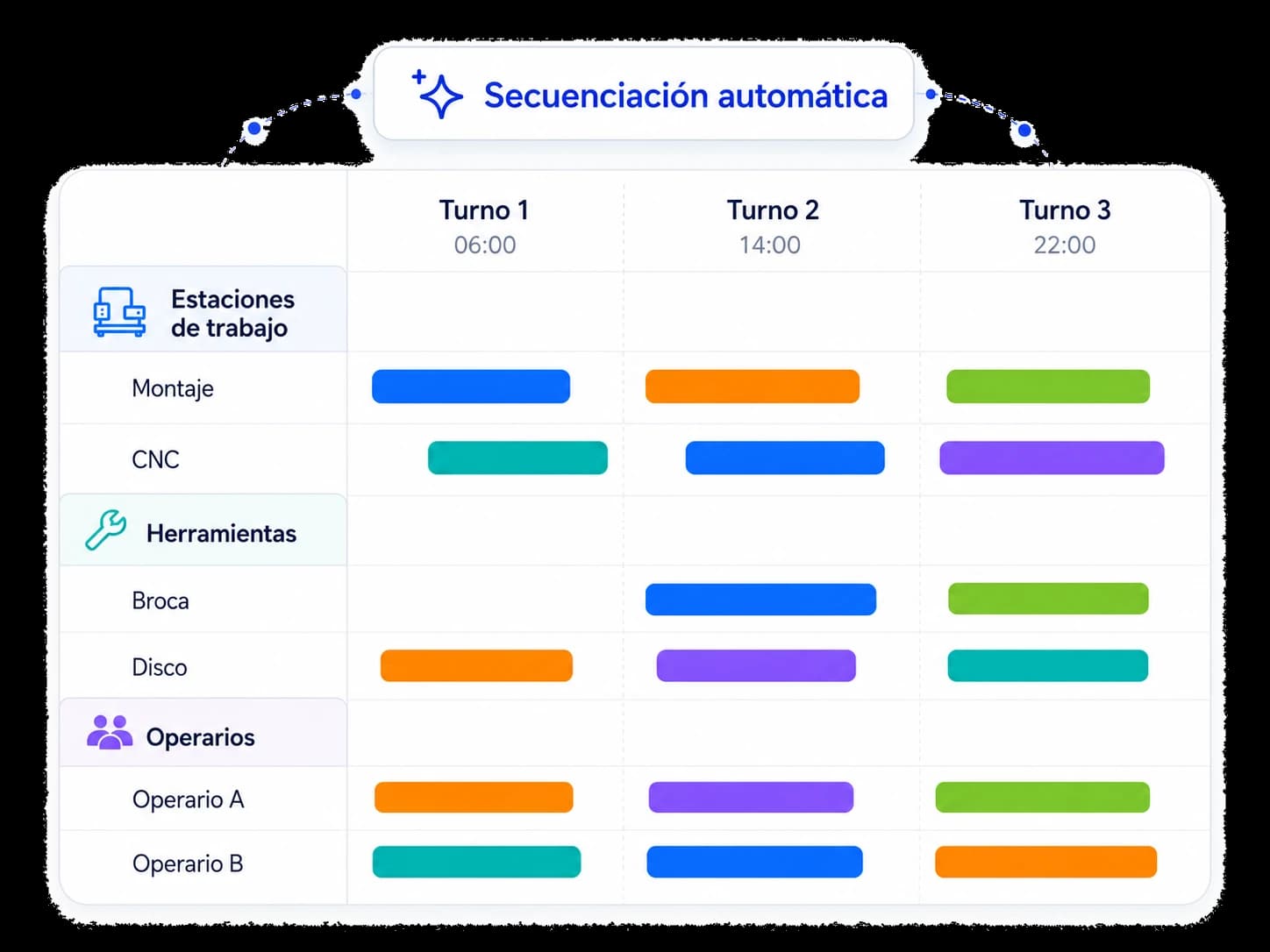
Bold automatically generates the optimal production plan for your factory floor, using mathematical algorithms to cross-reference your machines' real capacity, tooling, and team.

Your production team runs like clockwork — no more asking what comes next — and you give customers reliable delivery dates with the confidence to keep them.

Quality controls

Quality Controls

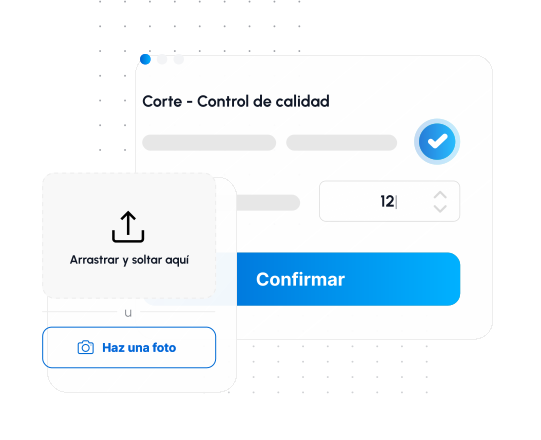
As part of the process definition, you can add quality checks of various types (yes/no, value range, photo attachment…). This way you catch errors as early as possible and avoid waste.

You can then analyse this data to understand what is going wrong in your process or on your machines, and take action to fix it.
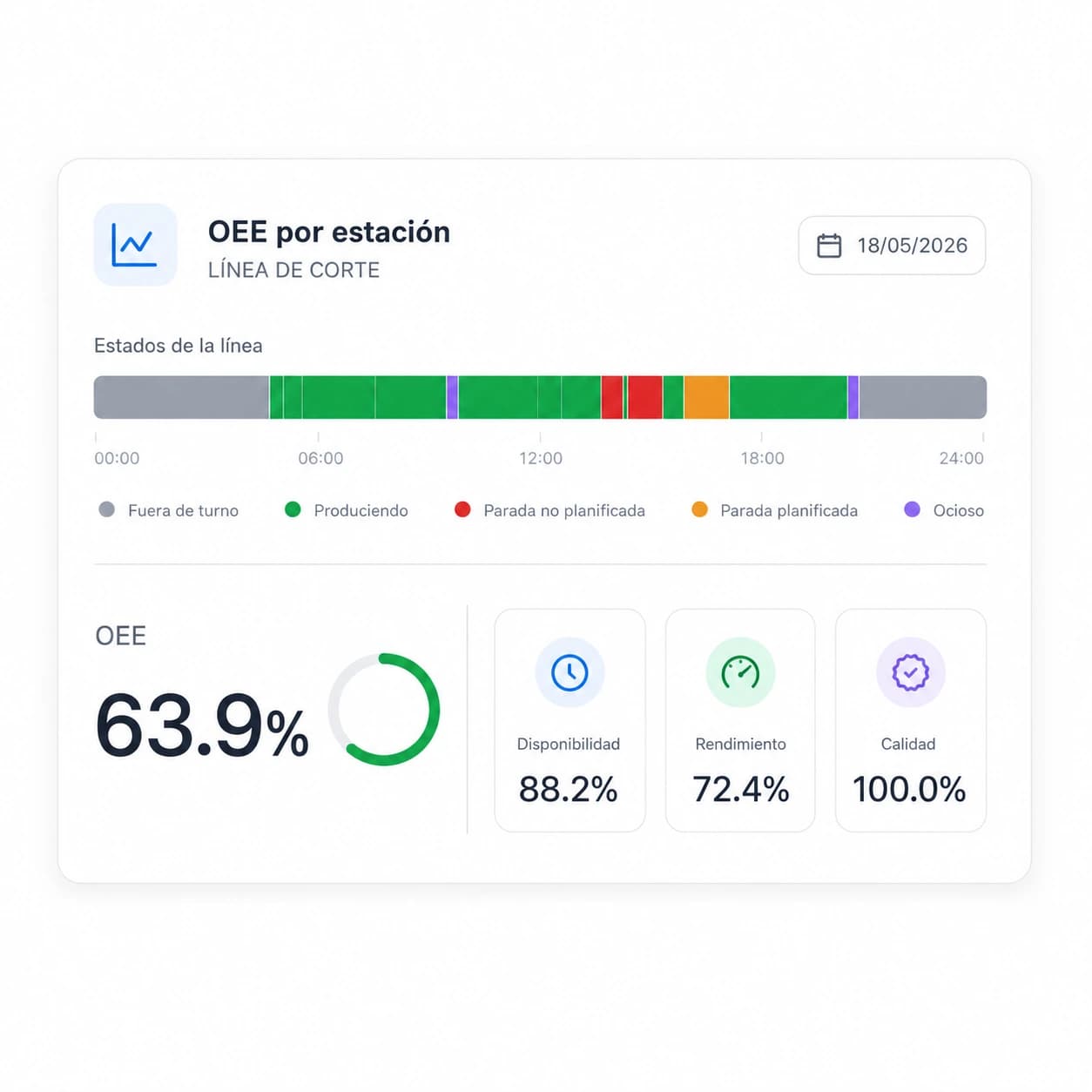
Automatic OEE calculation

Automatic OEE Calculation

Bold calculates OEE automatically and in real time from data your operators are already capturing on the shop floor: production times, stoppages, pace, and defective units.

You get the OEE and its three components — availability, performance and quality — broken down by machine, shift or product. At a glance you know where you're losing efficiency and where to tackle it first.

Frequently asked questions

Who is our MES software designed for?

Our MES software is designed for companies looking to optimize their production processes, reduce costs, and improve traceability — adapting to the demands of Industry 4.0. It is especially well suited to manufacturing SMEs that want to digitize their shop floor, factories that need real-time process control, businesses looking to reduce downtime and errors, operations that require full traceability, and organizations seeking to integrate into the Industry 4.0 ecosystem.

What is a MES system and what is it used for?

A MES (Manufacturing Execution System) is a tool that connects the production floor with business management. It enables real-time monitoring, control, and optimization of production processes. Its primary function is to improve operational efficiency, reduce downtime, and guarantee complete traceability of all operations. It also facilitates data-driven decision-making and helps meet quality standards. Using a MES system is essential for digitizing factories and adapting to the demands of Industry 4.0.

What benefits does MES software offer in manufacturing?

MES software improves visibility into production processes, reduces operating costs, and optimizes resource management. It enables rapid identification of inefficiencies, improves production planning and control, and guarantees product traceability. It also facilitates integration with other systems such as ERP and CRM. By digitizing the shop floor, businesses achieve greater competitiveness, flexibility in responding to demand changes, and improved product quality — all aligned with Industry 4.0 objectives.

How does a MES system work in a factory?

The MES collects real-time data from the production floor, enabling monitoring and control of every stage of the process. It integrates with machines, operators, and management systems, centralizing information to optimize decision-making. It automates tasks, manages work orders, and analyzes key performance indicators. In this way, factories can identify failures, improve productivity, and ensure the traceability of their products — all with the goal of reducing costs and increasing efficiency.

What is the difference between a MES system and an ERP?

The ERP manages the administrative and financial processes of the business, while the MES focuses on the operational management of production. The MES acts as a bridge between the shop floor and business management, providing real-time data on manufacturing, quality, and performance. Both systems are complementary: the ERP plans, and the MES executes and controls. Integrating both enables end-to-end management — from planning through to execution — improving efficiency and decision-making.

Which companies should implement MES software?

Any company in the industrial sector looking to optimize production should consider MES software. It is especially useful for manufacturing SMEs, factories with complex processes, companies that need traceability, and those seeking to reduce operating costs. It is also ideal for businesses that want to align with Industry 4.0 standards. Implementing MES software improves productivity, guarantees quality, and enables more efficient resource management in highly competitive environments.

How long does it take to implement a MES system?

Implementation time for a MES system depends on the complexity of the production processes and the size of the business. For industrial SMEs, the process can take between two and six months. It includes phases of analysis, configuration, integration with other systems, and staff training. The key is thorough planning and choosing an experienced provider. A well-managed implementation ensures return on investment through improved efficiency and reduced costs.

How do I choose the best MES software for my factory?

To choose the best MES software, you need to analyze the specific needs of your shop floor. Consider features such as real-time production control, traceability, ERP integration, ease of use, and scalability. It is important to assess the provider's track record, technical support, and the software's flexibility to adapt to your growth. You should also look for Industry 4.0-oriented solutions that enable full automation and digitization of your production processes.