What Is MOM Software?

2025-11-06
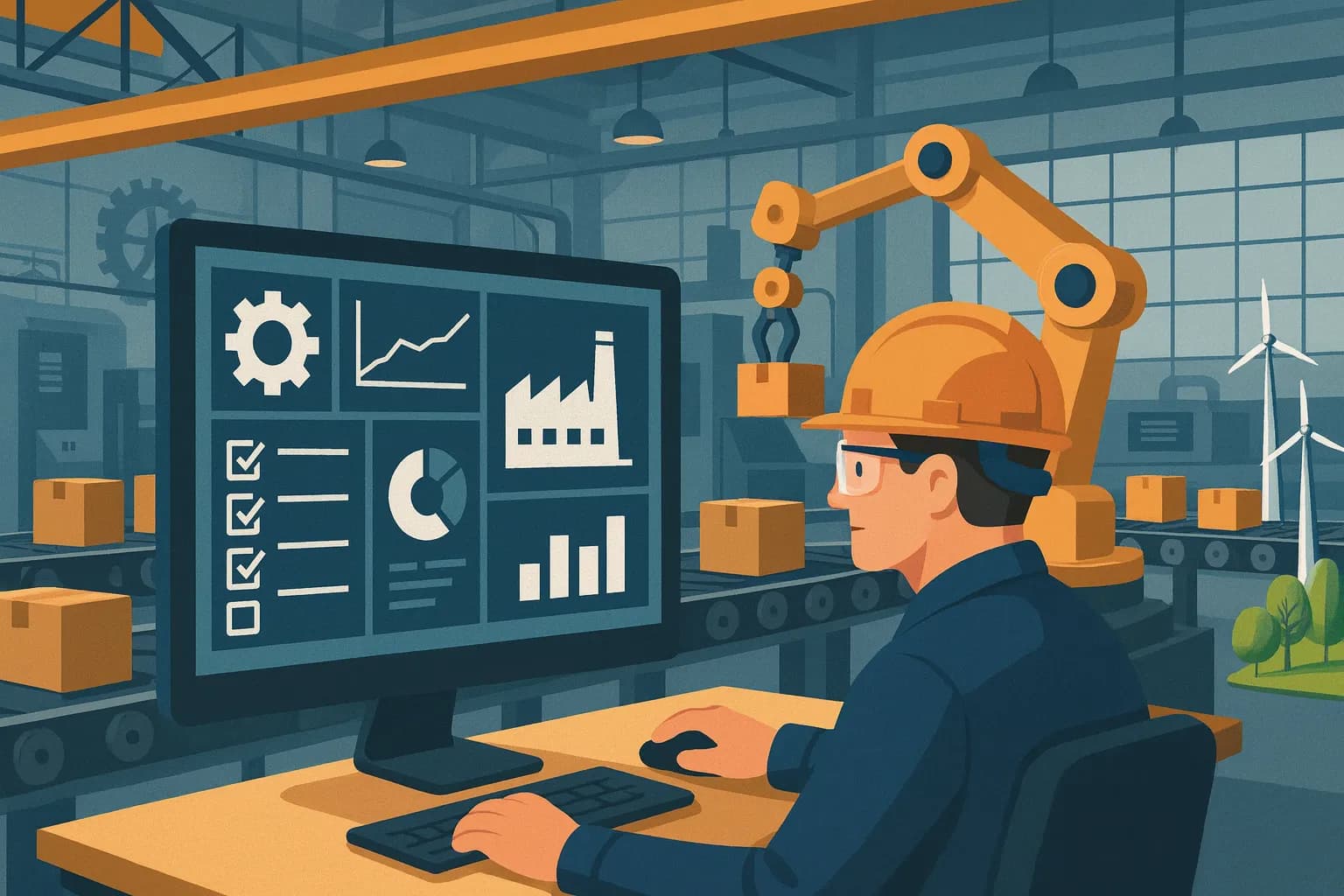
A Manufacturing Operations Management system, or MOM, is an integrated platform that brings together all the pieces of a factory’s operations management in one place. Unlike more specialized systems—such as MES (manufacturing execution), MRP (materials planning), SGA (warehouse management) or GMAO (maintenance)—MOM aims to provide a global, coordinated view of the plant.
A little history: from PLC to ERP
The concept of MOM did not come out of nowhere. Its origins lie in international standardization, specifically ISO 62264 (derived from the ISA-95 model), which describes how the different levels of systems within a factory should interact.
We can think of it as a pyramid of abstraction:
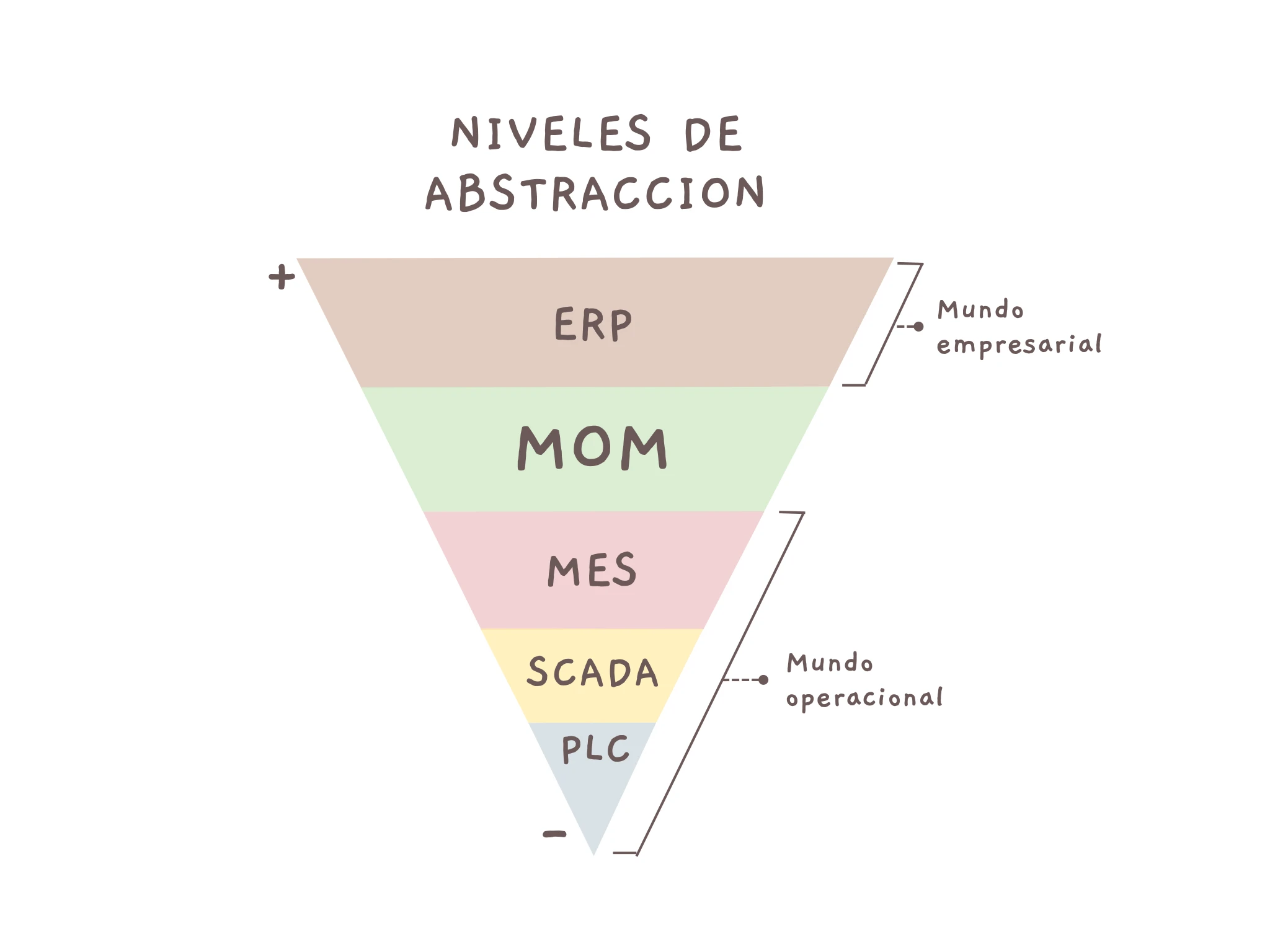
- PLC (Programmable Logic Controller): the lowest level, directly controlling machines and equipment.
- SCADA: monitors and centralizes information from PLCs.
- MES: manages production execution on the factory floor.
- MOM: coordinates all factory operations, integrating production, inventory, maintenance and personnel.
- ERP: at the top of the pyramid, manages the company’s administrative and financial operations.
In this model, MOM acts as the point of connection between the operational world (what happens on the factory floor) and the business world (what happens in the office).
What does MOM cover?
MOM integrates and centralizes the different systems that have traditionally been used in isolation. Its main functional areas include:
- Production (MES): control of order execution, real-time tracking and productivity analysis.
- Planning (MRP): calculation of material requirements, demand forecasting and production scheduling.
- Warehouse (SGA): stock management, lot traceability and control of internal movements.
- Maintenance (GMAO): planning preventive maintenance and recording incidents involving equipment and assets.
- Personnel: shift management, task assignment and tracking of operator efficiency.
The key is that MOM not only connects these modules, but also makes it possible to analyze data across them: how maintenance affects production, how inventory impacts planning, or how staff performance compares with the orders released.
Why isn’t an MES or ERP enough?
An MES does a good job of answering the question “What’s happening in production?”, but falls short when you need to connect it with inventory, suppliers or overall planning. These are highly interconnected issues that are often essential to the factory’s core activities.
An ERP, on the other hand, is more focused on financial and administrative management, and rarely goes into the details of day-to-day operations on the factory floor. What’s more, when it does, it’s usually through a complementary module that doesn’t cover most common use cases and is clearly a later addition to the software architecture. The risk is that operations become a black box, invisible to management.
In addition, many factories, especially manufacturing SMEs, don’t even have PLCs or SCADA systems to automate data capture. In these cases, the only way to understand what’s happening is to rely on the individual experience of factory-floor personnel.
A modern MOM like Bold is designed to address this reality: it offers a thoughtfully designed experience that allows operators themselves to enter production information simply and without friction. This means that even factories without a high degree of automation can benefit from an advanced management system and make informed decisions in real time.
MOM emerged in response to this gap: a platform capable of closing the entire operational loop and giving industrial companies a real-time window into their factory.
Benefits of MOM
- Real-time visibility: into everything happening on the factory floor.
- Fewer silos: one system instead of multiple disconnected applications.
- Resource optimization: materials, machines and personnel work in a more coordinated way.
- Complete traceability: from raw material to finished product.
- Intelligent automation: guided workflows, virtual assistants and advanced analytics.
Conclusion and challenges
Adopting MOM involves more than installing software: it requires a cultural shift in how factories are managed. But its potential is enormous: efficiency, quality and adaptability in an increasingly demanding market.
That’s why, at Bold, we’ve created a MOM designed for industrial SMEs, with a simple interface for operators, a modular design that lets you grow step by step, and the ability to integrate with any other system thanks to a public API.
If you want to see how it works in practice, request a demo and discover why Bold Factory is your best ally for digitizing your factory.