How to Integrate an MES System Step by Step: A Practical Guide for Production Managers

2025-11-20

Implementing an MES system (Manufacturing Execution System) or MOM (you can read more about the term in this other article) is one of the most important decisions a production manager can make. It is not simply a change of software, but a transformation that affects how work is organized, measured, and understood within the plant.
In manufacturing SMEs, where much of the operational knowledge resides with people rather than in data, this type of system makes it possible to turn accumulated experience into useful information. It connects machines, operators, and planning in a single environment, providing a real, shared view of what happens on every shift and of the state of the factory.
In short, an MES/MOM does not replace experience: it organizes and amplifies it.
Understanding the starting point
Before thinking about implementing a system, it is worth looking inward. Where are hours being lost? Which tasks are repeated without adding value? Which decisions are made without supporting data? Most SMEs share the same pattern: too much scattered information (Excel, paper, the heads of key employees, or the ERP itself) and little overall visibility.
The first step is to define what you want to solve. Sometimes a major project is not necessary; it may be enough to know the status of each order, have a metric for each operator’s individual work, or take control of the warehouse to maintain reliable inventory. In Bold Factory, for example, many companies start with manufacturing alone, seeking more precise control over the status of their orders. After a few weeks of recording operations and downtime, managers spot patterns that had previously gone unnoticed: recurring stoppages, idle time, or poorly sequenced processes.
That visibility alone already has an impact without changing the way work is structured.
Integration step by step
Implementing an MES should be a gradual process. Trying to tackle everything at once—production, planning, warehousing, maintenance, and quality—often leads to resistance and slows adoption. The most effective approach is to start with the area where the information payoff is immediate, and expand from there.
One methodology that usually works for us and that we apply with our clients is this:
- Define clear objectives. The goal is not to “digitize,” but to solve a specific problem (for example, understanding the actual efficiency of machines or reducing incidents).
- Choose an adaptable system. In an SME, processes change quickly. An MES/MOM must be able to grow without needing to be rebuilt every few months.
- Train and support the team. Technology works when people use it. Involving operators from the outset is more effective when they understand why it is being done and what benefits they will gain.
- Measure and adjust. Once the data starts flowing, it needs to be reviewed and used to make decisions. The value of an MES/MOM lies not in its installation, but in its daily use.
The role of the operations director is essential throughout this process. It is not just about approving an implementation, but about leading a cultural transition toward a more modern factory, one that thinks with data and acts accordingly. This is the person who gives meaning to the information generated by the system, translating it into operational decisions that improve productivity and prevent deviations from becoming problems. Their mission is to ensure that the MES/MOM is not just another IT project, but a living tool that guides daily work and strengthens team autonomy.
As the system becomes established, the operations director moves from reacting to unexpected events to anticipating them. Accumulated records make it possible to detect patterns, adjust operating rates, balance workloads, and plan production or maintenance in advance. This ability to turn data into foresight is what transforms plant management: instead of spending hours “putting out fires,” it becomes a driver of continuous improvement, using information to adjust plans, redefine processes, or adapt shifts. The system begins to integrate naturally into the production culture.
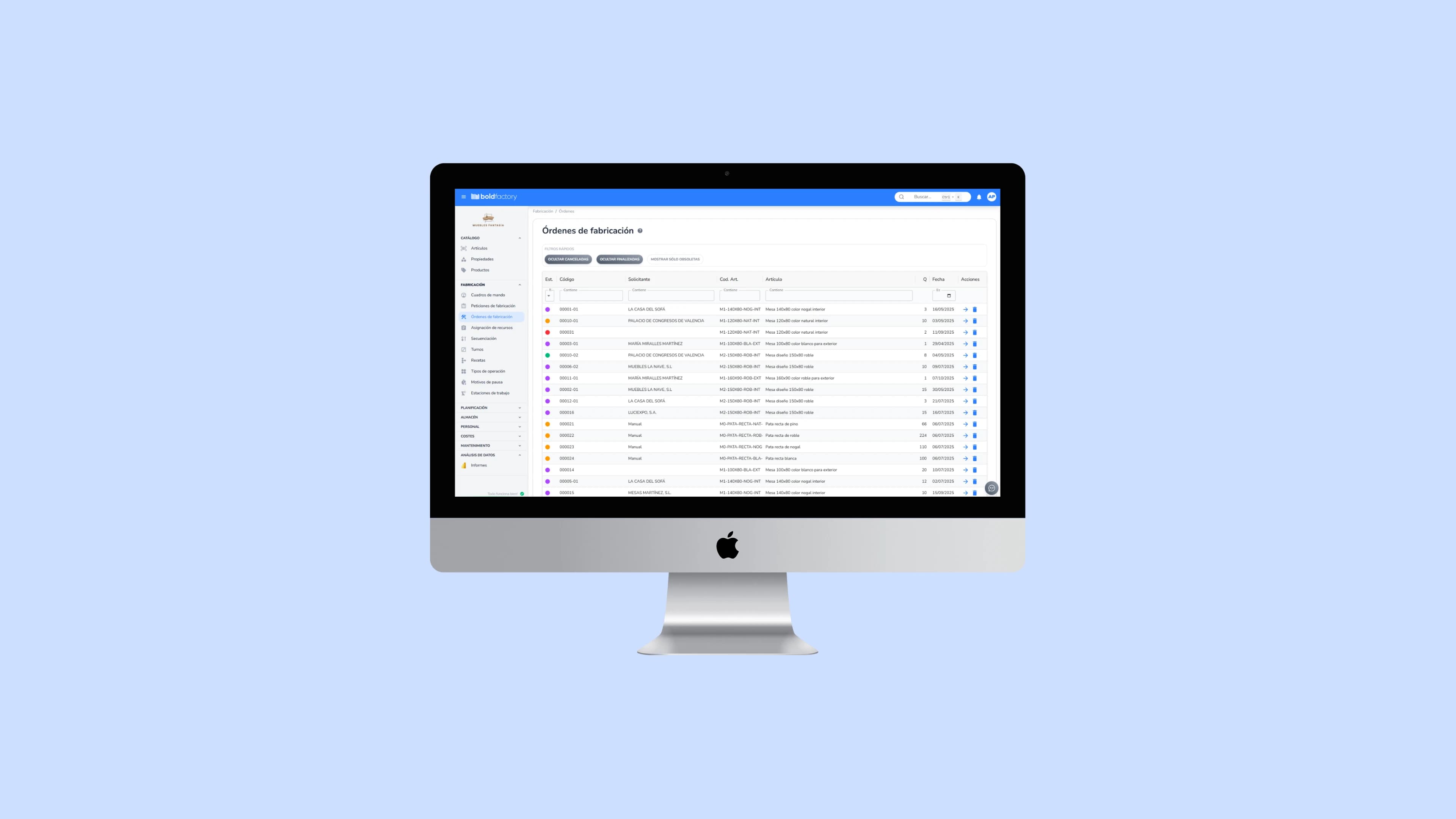
At Bold, dashboards make it possible to see at a glance which stations are active, which orders are delayed, or whether the material is ready to start production. This immediate visibility makes it easier to make quick, fact-based decisions rather than relying on assumptions. Continuous improvement does not depend on major projects, but on maintaining a consistent routine: record accurately, review thoughtfully, and act quickly. Ultimately, that is the purpose of a good MES/MOM system and the responsibility of the person leading it: turning information into action and action into learning.
Implementing an MES/MOM system is not an IT project, but a way to run the factory better. And although technology changes, the objective remains the same: manufacture more and better, with less effort and greater control.
In this respect, solutions like Bold Factory help you take the first steps flexibly and without major investments, but the real transformation begins inside the plant, when data becomes decisions.
If you want to find out how all this could apply to your situation, schedule a personalized demo and discover how to optimize your production with Bold Factory.